Grease and Class K cooking oil fires generate unique remediation requirements due to the presence of protein soot. Unlike standard wood or drywall combustion, burning animal fats and vegetable oils create a sticky,…
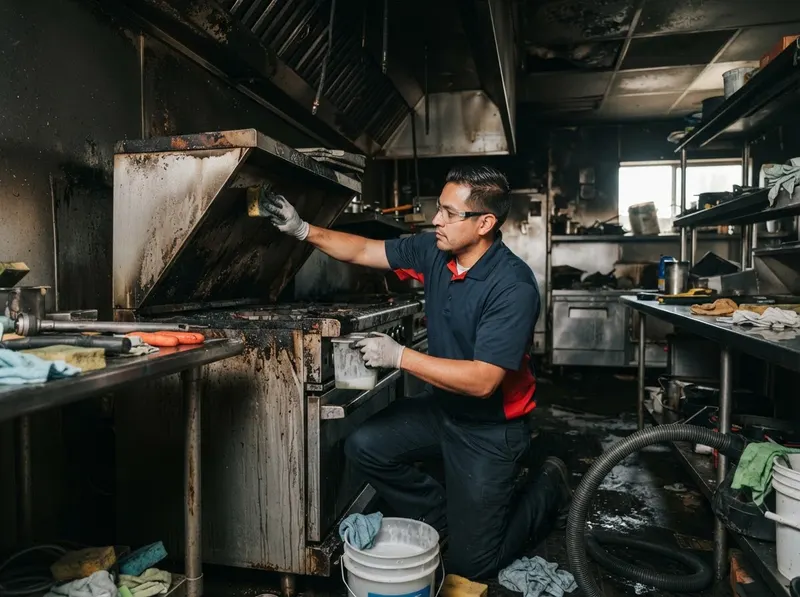
Grease and Class K cooking oil fires generate unique remediation requirements due to the presence of protein soot. Unlike standard wood or drywall combustion, burning animal fats and vegetable oils create a sticky, yellowish, semi-clear residue that adheres chemically to stainless steel, tile grout, and porous ceiling grids. If unaddressed, this residue rapidly corrodes expensive commercial equipment and leaves an acrid, rancid odor that permeates through common air barriers. Remediating a facility in high-density corridors like Koreatown or Venice requires specialized chemical agents to break down the lipid layer without degrading commercial food-prep metal finishes. When grease fires breach the exhaust plenum, remediation encompasses the entire mechanical ventilation run up through roof-mounted utility fans, preventing re-ignition risks during building restarts.
Immediate mitigation balances surface cleaning with atmospheric deodorization and deep structural stabilization. High-heat kitchen fires routinely trigger commercial dry chemical suppression systems and municipal fire sprinklers, inundating dining rooms and prep floors with thousands of gallons of water. While an isolated deep fryer flare-up requires localized protein degreasing and Class K chemical neutralizers, an uncontained vent fire across multi-story buildings in Sherman Oaks or Woodland Hills necessitates extensive drywall removal, cavity drying, and mechanical duct disassembly. Choosing targeted surface cleaning works when the fire remains localized below the baffle line, but duct fires require total teardown and certification to satisfy Los Angeles Department of Building and Safety (LADBS) and health agency standards.
Property managers coordinating through Los Angeles County must navigate both structural containment and rigorous insurance claim procedures. First Fire Damage Restoration establishes direct communication with insurance carriers, compiling itemized room-by-room inventories, photographic evidence, and moisture readings to support claim filings without ambush billing. Crews clean air pathways using industrial hydroxyl generators and thermal foggers rather than masking sprays, eliminating carcinogenic particulate matter rather than concealing odors. From boutique bistros along Silver Lake Boulevard to commercial properties near the Sepulveda Basin Recreation Area, facilities receive structured decontamination focused on rapid clearance, code compliance, and structural integrity.
Every job gets a firm, written price after a free on-site visit.
Tell us about your commercial kitchen and grease fire remediation job in los angeles and we'll send a clear, written quote, usually the same day.
 First Fire Damage Restoration