Synthetic materials found in modern residential and commercial interiors, such as polyurethane foam cushioning, polyvinyl chloride (PVC) plumbing, and polyester textiles, produce highly acidic soot particles when…
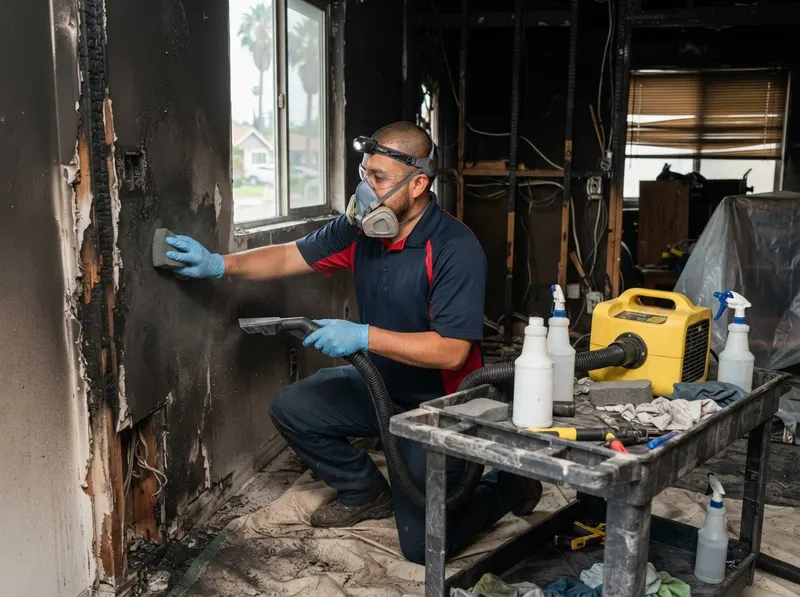
Synthetic materials found in modern residential and commercial interiors, such as polyurethane foam cushioning, polyvinyl chloride (PVC) plumbing, and polyester textiles, produce highly acidic soot particles when burned. Within 24 to 72 hours of combustion, this acidic film begins etching glass, pitting chrome and brass fixtures, yellowing plastics, and permanently bonding into porous wall finishes. Acidic soot removal requires distinct restoration chemistry: oil-based wet residues demand polar solvent washes, whereas dry protein or high-oxygen wood soot requires chemical sponge wiping before any liquid contact is introduced to prevent driving the acidic charge deeper into the substrate.
Properties across distinct microclimates in Los Angeles face specific degradation timelines due to regional humidity and temperature variations. In coastal zones such as Venice and Pacific Palisades, marine layer moisture accelerates the electrolytic corrosive reaction between acidic soot and building metals, causing structural copper and exterior aluminum framing to corrode significantly faster than in arid inland pockets. Conversely, properties situated along the foothills of Woodland Hills and Sherman Oaks experience elevated ambient heat during Santa Ana wind conditions, which bakes oily combustion residues directly into porous masonry, plaster, and untreated Douglas fir studs. High-density structures in Koreatown and steep-slope hillside homes in Silver Lake, Los Feliz, Highland Park, and Mount Washington present access complexities where contained negative-air HEPA scrubbing must be established inside the footprint before dry-vacuuming dislodges particulates.
Technicians follow a sequenced physical decontamination protocol. 1. Contain the work zone utilizing 6-mil poly sheeting under negative air pressure of at least -0.02 inches of water column. 2. Vacuum all loose particulates using critical-filter HEPA extraction units retaining particles down to 0.3 microns. 3. Apply vulcanized natural rubber dry-cleaning sponges across non-porous and lightly soiled porous finishes to capture surface carbon without moisture. 4. Wash structural substrates using formulated alkaline degreasers to raise the pH level of the acidic residue toward neutral 7.0, preventing underlying oxidation. 5. Wipe metal components and mechanical equipment with corrosion inhibitors before final clearance testing. If contamination is caught within the initial 48 hours, standard chemical neutralization preserves existing painted drywall; if delay occurs past 96 hours, soot acids etch into the paint matrix, necessitating abrasive soda-blasting or complete structural demolition of the board.
Every job gets a firm, written price after a free on-site visit.
Tell us about your acidic soot removal and surface decontamination job in los angeles and we'll send a clear, written quote, usually the same day.
 First Fire Damage Restoration